


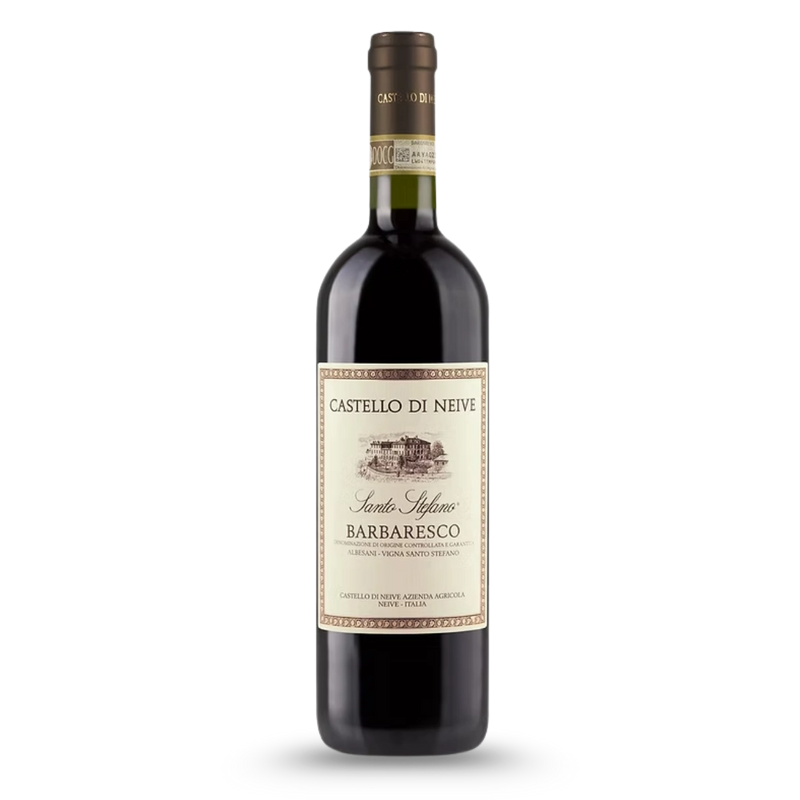


The Barbaresco Santo Stefano from Castello di Neive originates from one of the most renowned vineyards within the Barbaresco appellation. What makes Santo Stefano so special within Barbaresco? This cru is known for its combination of power and elegance, where Nebbiolo shows both structure and refinement. Its location in the municipality of Neive and the specific soil composition give this wine its recognizable depth and complexity.
This Barbaresco is made entirely from Nebbiolo and is produced according to the requirements of the DOCG classification.
The Santo Stefano vineyard is located in Neive and belongs to the historic core of Barbaresco.
-
Municipality of Neive, Barbaresco DOCG: one of the three official villages within the appellation.
-
Southwestern exposure: optimal ripening of Nebbiolo.
-
Calcareous marl soils: contribute to structure and aromatic finesse.
-
Historically recognized cru: known for wines with aging potential and layers.
The combination of location and soil results in Nebbiolo with firm tannins, but also aromatic refinement.
Nebbiolo – Santo Stefano, Neive
Nebbiolo is a late-ripening grape from Piedmont known for its high acidity and firm tannins, resulting in wines with a long lifespan and pronounced aromatic complexity.
The Barbaresco Santo Stefano is traditionally vinified with controlled fermentation to optimize the extraction of color and structure. Subsequently, the wine ages for a longer period in wood, in accordance with Barbaresco DOCG regulations, which refines tannins and increases complexity.
In the glass, this Barbaresco shows a garnet red color that develops further with age. The wine is known for aromas of red fruit, roses, spices, and subtle earthy notes. Due to its natural acidity and tannin structure, the Santo Stefano has clear aging potential, with the wine developing further over several years.
Serve around 16–18 °C to allow the structure and aromatic precision to be optimally expressed.
Castello di Neive is located in the historic village of Neive, in the heart of the Langhe. The estate combines centuries of vineyard history with modern viticulture techniques. Within its range, the Santo Stefano vineyard plays a central role, as this cru has been recognized for generations as one of the most important terroirs of the estate. Castello di Neive focuses on preserving characterful Nebbiolo wines that clearly reflect their origin.


