


It began in 1798 when Bruno da Silva, a Portuguese merchant from Porto, embarked on a journey that was the opposite of that of the early British merchants. Bruno settled in London, from where he imported wine from his native country. He married an Englishwoman and quickly became part of London society, where his business acumen led to a good reputation for his ports. But the outbreak of the Napoleonic Wars jeopardized his business. Undeterred, Bruno da Silva requested that his ships be equipped with cannons to protect themselves from the sea. Many years later, port wines are still widely consumed in Great Britain and certainly beyond.
Dow's is almost the only port still making grapes pressed using bare feet. The grapes are placed in concrete tanks, after which a group of men, arms on each other's shoulders, crush the grapes with their bare feet. This centuries-old tradition is held in high regard at Dow's. And the winemaker explains that it makes a significant difference because the pressing is so much more even. Because workers are becoming increasingly scarce, Dow's built a special machine in 2001 that also presses the grapes evenly, just like with bare feet. Nevertheless, much of the production continues using the centuries-old method.
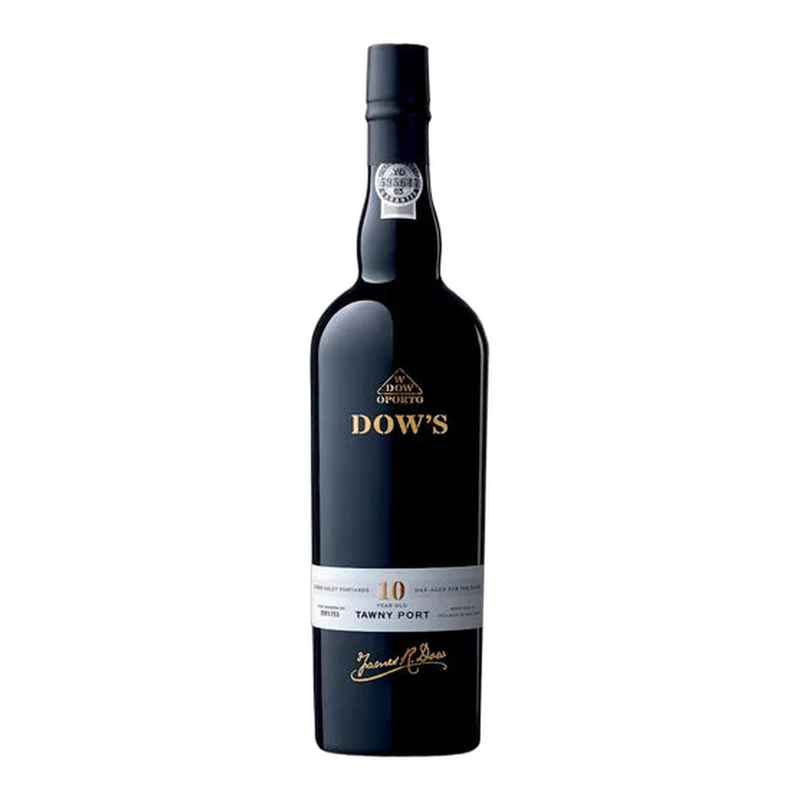
Dow's cellars hold thousands of barrels containing various vintages of port wines. All the old ports are aged in wooden barrels and contribute to the consistent quality of this 10-Year-Old Port, among others. For this 10-Year-Old Port, the Dow's winemaker blends various vintages of port wines with an average age of 10 years. So, we can say this port is at least 10 years old, but it could also contain very old port. But that's the craftsmanship of Dow's, and connoisseurs know better than anyone that it's been consistent for years.
On the nose, this Dow's 10-Year-Old Tawny Port offers notes of almond, currants, black fruit, and a touch of dark chocolate. The palate is smooth and very refined, with lovely hints of dried fruit, vanilla, and stewed cherries.


