

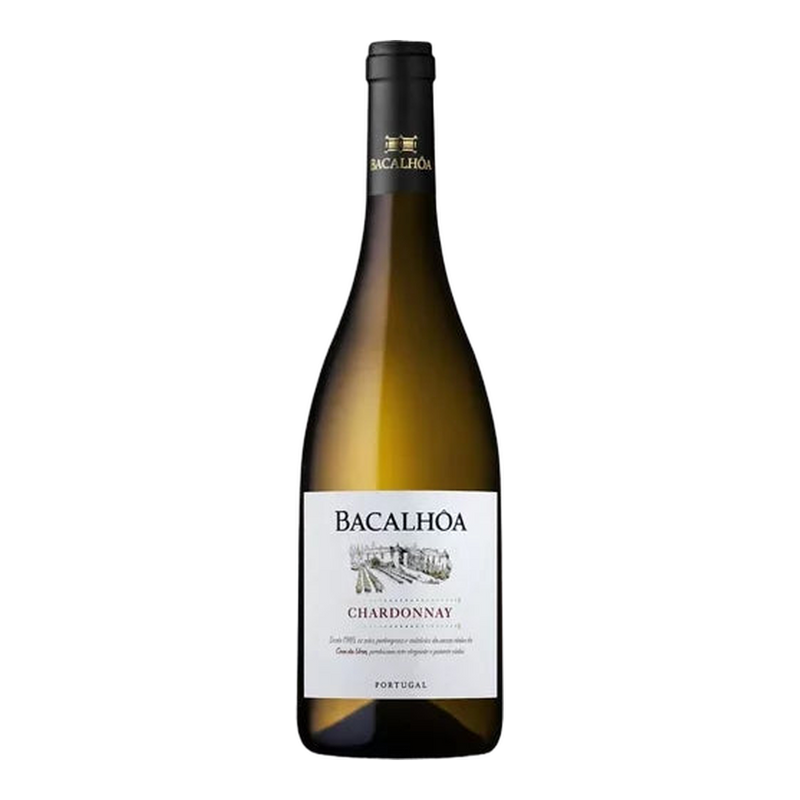


Bacalhôa Chardonnay 2024 comes from the Cova da Ursa vineyard in Azeitão and is a wine with a special place in Portuguese wine history. What makes Cova da Ursa so important for Portuguese Chardonnay? This was the first Portuguese Chardonnay released under this name and the first white wine in Portugal to be fully fermented in new French oak barrels. In 2024, despite an early harvest year, the slow ripening resulted in a Chardonnay with mineral tension, floral refinement, and strikingly beautiful natural acidity.
The grapes come from Cova da Ursa, in the Serra da Ursa on the hills of Azeitão, within the Arrábida mountain range.
- Origin: The vineyard is located in Cova da Ursa, a specific location in Azeitão that has been inextricably linked with Bacalhôa Chardonnay since the first vintage of this wine.
- Terroir: The stony clay limestone soil not only gives the wine structure but also that characteristic mineral tension that distinguishes this Chardonnay from richer, softer styles.
- Mesoclimate: Arrábida's unique climate ensures slower grape ripening, allowing aromas to build up gradually and preserving natural freshness.
- Harvest time: The harvest took place on August 28, which was early for the season, but the grapes ripened slowly and precisely for that reason, developing great precision and balance.
That slow ripening process is a true terroir USP here, as it gives the wine tension and finesse rather than just ripe fruit.
The vinification of Bacalhôa Chardonnay 2024 focuses on breadth, texture, and complexity, without losing freshness.
- Winemaker: Filipa Tomaz da Costa is responsible for this vintage and works here with a style in which ripe fruit, wood, and minerality are perfectly aligned.
- Oak aging: 60% of the wine ferments and ages for 5.5 months in new fine-grain French oak barrels. This gives the wine extra texture, subtle toast notes, and more depth without overpowering the fruit.
- Bâtonnage: Daily bâtonnage, the stirring of the fine lees, ensures more aromatic complexity and a creamier mouthfeel.
- Analysis: With 13.8% alcohol, 6.2 g/l total acidity, and only 0.77 g/l residual sugar, the wine has enough power for oak aging but remains tight and dry in style.
- Bottling date: The wine was bottled in May 2025, after which it can further develop towards more layering and notes of dried fruit.
The combination of fine-grain French oak and daily bâtonnage is the clear vinification USP here, as it provides creaminess and length without becoming heavy.
Chardonnay – Cova da Ursa, Azeitão
Chardonnay shows a different side of Portugal here, with ripe yellow fruit, fresh acidity, and a mineral undertone that combines beautifully with subtle oak influence.
Bacalhôa is one of Portugal's most renowned wineries and, with this Chardonnay, holds a wine of historical importance for the country. Since its first vintage in 1986, this wine has been produced, with Cova da Ursa growing into a recognized name for ambitious Portuguese Chardonnay. It is precisely the combination of own vineyards, a clear origin in Arrábida, and a consistent style that makes Bacalhôa Chardonnay one of the references among white wines from the Península de Setúbal.


