
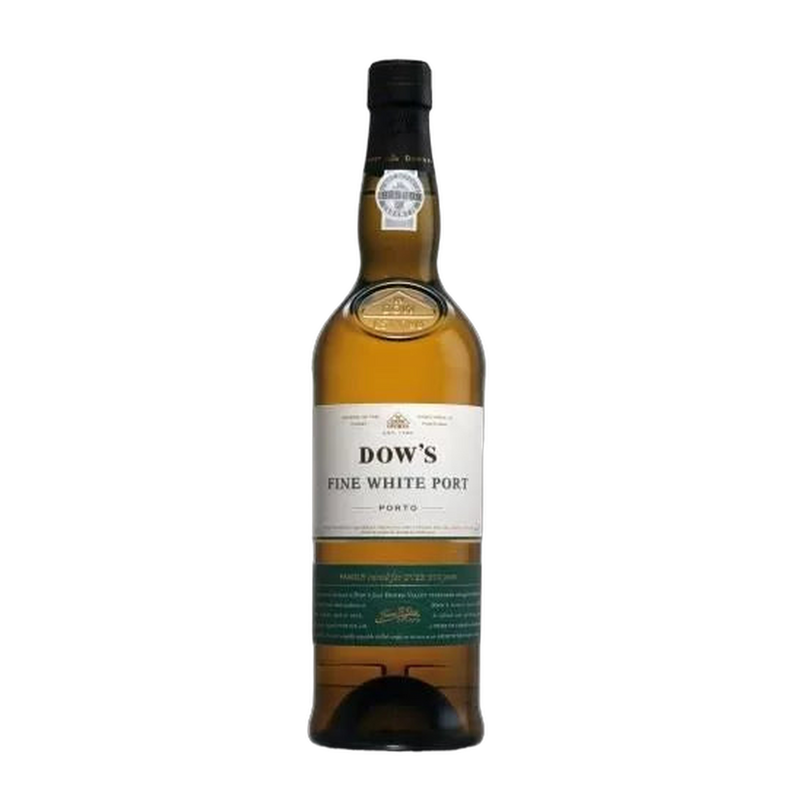


A port house with a rich history and over 100 years of experience. Dow's long history began in 1798 when Bruno da Silva, a Portuguese merchant from Porto, embarked on a journey that reversed that of the early British merchants. Bruno settled in London, from where he imported wine from his native country. He married an Englishwoman and quickly became part of London society, where his business acumen led to a strong reputation for his ports. Today, Great Britain remains one of the largest export countries for Dow's port. This memorable house has also established a strong presence in the Netherlands.
This white port from Dow's is made from authentic local white grape varieties often used for white port. These grapes are named Malvasia, Codega, Rabigato, and Viosinho. A perfect combination, using several three-year-old port wines. Most of the wines are aged in small wooden barrels for strength and suppleness. A small number are not, which preserves a lovely freshness in the port. Before we can enjoy this delicious port, a lot of work has to be done. Starting in the vineyards, these grapes love plenty of sun, which requires a lot of pruning. It's important that the grapes don't ripen too quickly. When the grapes are fully ripe at the end of the growing season, the harvest is organized by variety. Once they arrive at the press, the grapes are pressed.
Yes, that pressing—that's still something I find fascinating about Dow's. This pressing works best when the grapes are crushed very evenly. A very good, yet intensive, method was invented for this long ago. Dow's is one of the few that still uses this method and also wants to keep it instant. However, this requires a lot of manpower, as the grapes are all crushed with (naturally clean) bare feet. All the men and/or women stand in a large container and hold each other by the shoulders. At a leisurely pace, all the grapes are carefully crushed, allowing the finest juice to flow directly into the tanks. Because there are fewer and fewer men and women practicing this craft, Dow's has developed a machine that can gradually take over this method in the future. But as long as it's not necessary, they will use it as little as possible. After much work, this magnificent white port is ready. Thanks to the wood aging, Dow's white port has a beautiful, deep, straw-yellow color. The nose reveals intense aromas of nuts and tropical and yellow fruit. This translates into a pleasantly sweet white port with a wonderfully refreshing acidity on the back of the tongue.


