
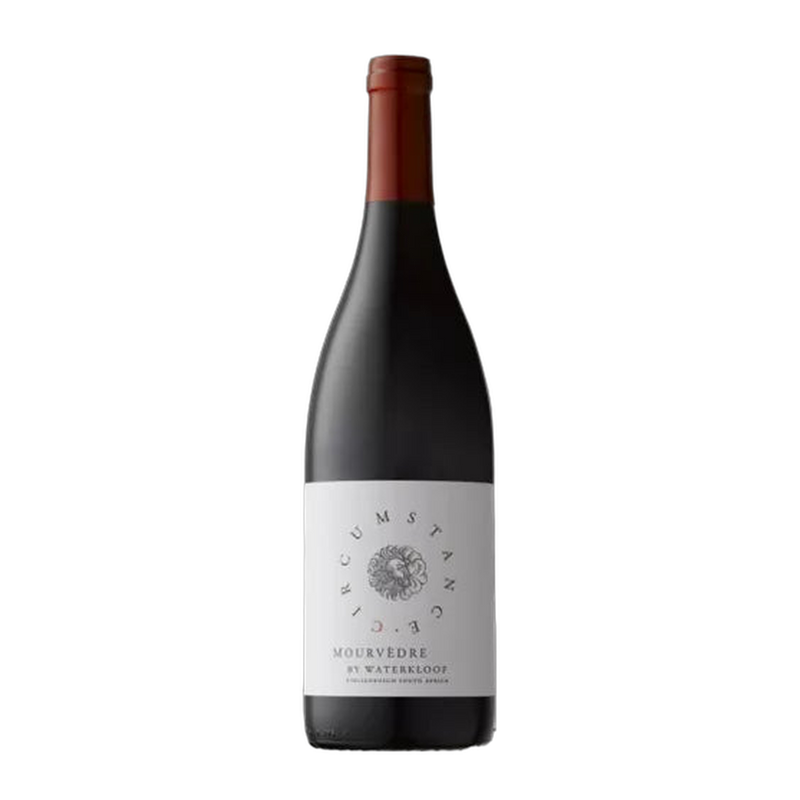


In 2004, Paul Boutinot purchased the Waterkloof wine estate. The estate is located on Schaapenberg Hill in Somerset West, Stellenbosch, just a stone's throw from the ocean. The vineyards are situated 300 meters above sea level and benefit from an excellent climate. They are characterized by their mineral character and elegant style. The estate is fully biodynamically managed.
Originally from Spain and named after the Spanish town of Murviedro, the Mourvèdre grape variety is known as the signature variety of France's Bandol region and is also used in the Languedoc and Southern Rhône as part of their red blends.
It's a later-ripening variety that thrives in dry, warm, and sunny conditions. Therefore, Mourvèdre is planted as a vine near Waterkloof to utilize the earth's warmth when temperatures drop in the evening and night.
The two separate vineyard blocks are located approximately five kilometers from the sea and are planted at an altitude of between 270 and 300 meters above sea level. The soils are of decomposed granite origin with medium-sized stones that aid drainage. These factors combine to produce low yields, balanced grapes, and wines with a true sense of place. Mourvèdre is one of the few varieties with sufficient wind resistance to be planted as a bush vine at Waterkloof. Grapes are harvested by hand and brought to the cellar by horses for hand sorting. Bunches are sorted, and whole-bunch fermentation occurs spontaneously with wild yeast in large open wooden fermenters. Manual punch-downs, or foot presses, take place once or twice a day, and the wine is left on the skins for 30 days before malolactic fermentation in old 600-liter barrels and then aged for 16 months in the same barrels.
The result is a typical Mourvèdre with a high concentration of fine tannins and a surprising lightness. Delicious!


