


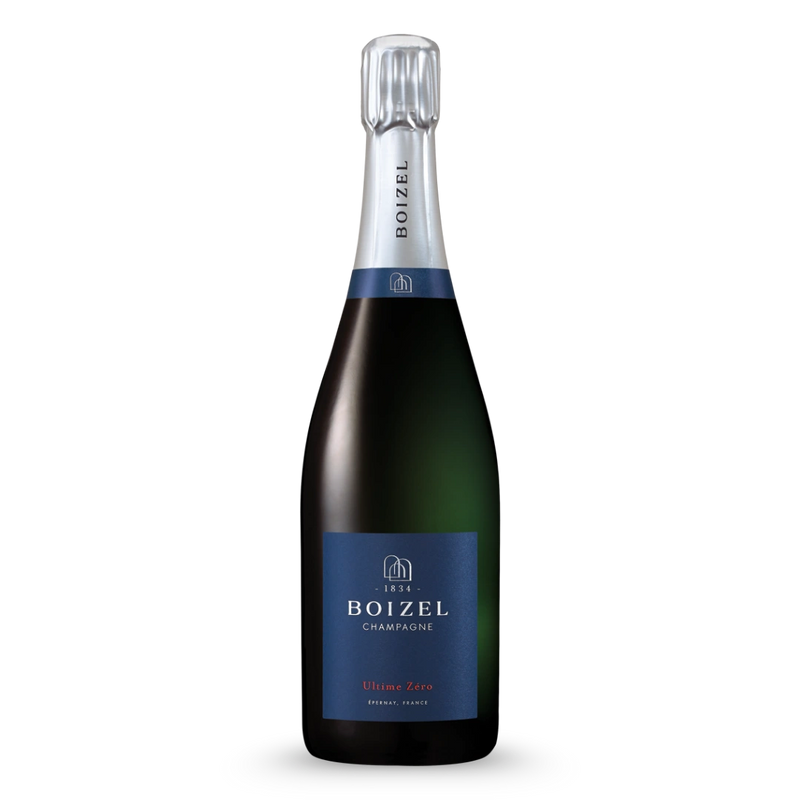


Champagne Boizel Ultime Zéro is a brut nature Champagne from Épernay, crafted for lovers of pure, dry, and gastronomic sparkling wines. This cuvée has 0 g/l dosage and undergoes 5 years of aging on its lees, which keeps the wine crisp and pure, while providing enough depth and texture. With 50% Pinot Noir, 40% Chardonnay, and 10% Meunier, Ultime Zéro brings together the three classic Champagne grape varieties in a very precise way.
This Champagne comes from the Champagne region, with Boizel as a historic family house on the Avenue de Champagne in Épernay.
• Location / Origin: Champagne Boizel is located in Épernay, one of the most famous places within Champagne. From this base, the house creates cuvées where freshness, precision, and cellar aging are central.
• Selection: Ultime Zéro is made from grapes selected for high ripeness. This is important for a Champagne without dosage, as the balance must come entirely from the grapes, blending, and aging.
• House Style: This cuvée is all about a pure, subtle, and gastronomic style. The longer aging in the cellar provides extra complexity, while the wine remains dry and crisp.
Champagne Boizel Ultime Zéro is made from the three classic grape varieties of Champagne.
• 50% Pinot Noir – Champagne: Pinot Noir forms the firm base of the cuvée, providing structure, depth, and vinosity.
• 40% Chardonnay – Champagne: Chardonnay brings freshness, elegance, and a refined tension to the blend.
• 10% Meunier – Champagne: Meunier adds fruity roundness and helps the Champagne feel more approachable and harmonious.
For Ultime Zéro, the emphasis is on ripe grapes, long aging, and a completely dry finish.
• Assemblage: The blend consists of 50% Pinot Noir, 40% Chardonnay, and 10% Meunier, supplemented with 30% reserve wines. These reserve wines add extra depth and continuity to the style.
• Dosage: What does zero dosage mean? Zero dosage means that no sugar is added after aging, which preserves the Champagne's pure, dry, and sharply mineral character.
• Aging: The Champagne ages for 5 years on its lees. This long aging on fine yeast cells gives the wine more texture, complexity, and a finer mousse.


