

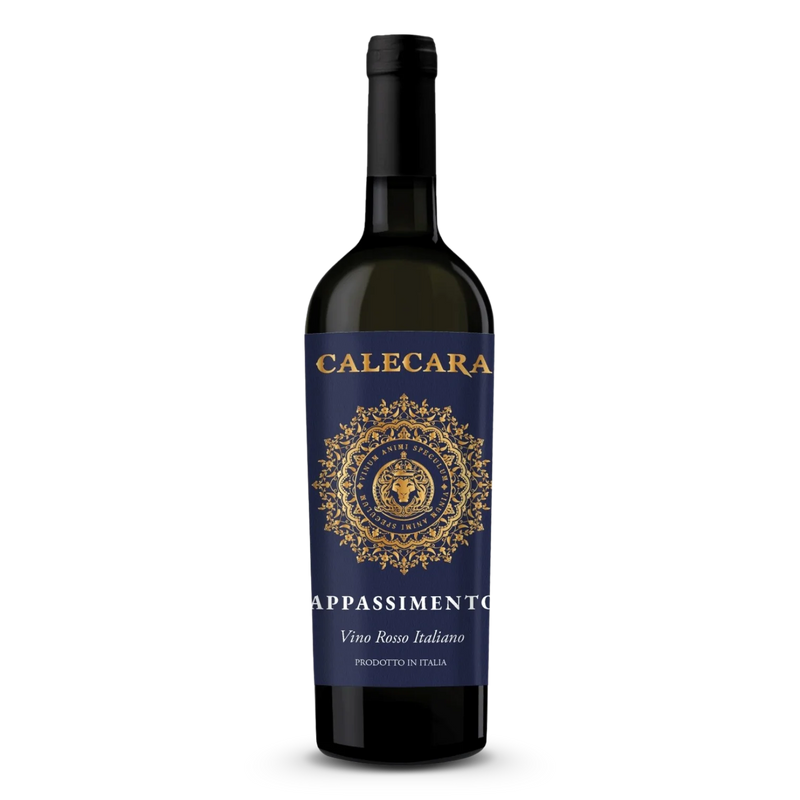


The southern location and the influence of the surrounding seas determine the viticultural landscape in which Calecara operates.
- Location / origin: The wine comes from Puglia, in Southern Italy, and is released as Vino Rosso Italiano. Calecara is connected to Salento, the peninsula between the Adriatic and Ionian Seas.
- Soil: In Calecara's vineyard areas, lime and clay-rich soils predominate, interspersed with sandy patches and rocky soils with visible stones. The clay can retain moisture during dry periods; differences in soil composition influence water availability and vine growth.
- Climate & influences: Salento combines plenty of Mediterranean sun with varied air currents. Cool Tramontana winds from the Adriatic side and warmer air from North Africa create alternating conditions, while nightly ventilation helps to cool the vineyards.
The concentrated grape material is processed gently to extract color and flavor while maintaining supple tannins.
- Harvest & selection: Appassimento means that grapes dry out before fermentation, causing water to evaporate and the juice to concentrate. For this wine, the grapes are destemmed and then processed without crushing.
- Fermentation: Alcoholic fermentation takes place for about 10 days in stainless steel tanks at 23 °C. In the initial phase, remontage and délestage are applied: the juice is pumped over the skins or temporarily drained and returned for controlled extraction. After racking, malolactic conversion follows, which rounds off the acidity and contributes to the soft mouthfeel.
Negroamaro and Sangiovese give the blend a combination of dark fruit richness and fresh structure.
- Negroamaro – Italy: Provides color, ripe dark fruit, and a spicy undertone, with enough body for the full appassimento style.
- Sangiovese – Italy: Adds red fruit, lively acidity, and tannin structure, giving the rich flavor extra tension.


