
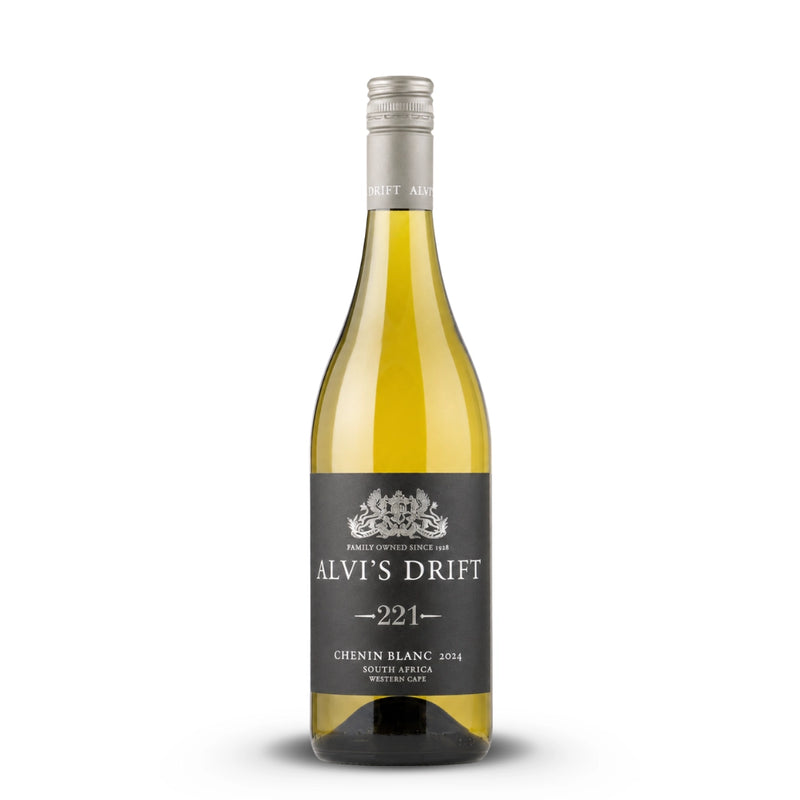


Alvi’s Drift 221 Chenin Blanc 2024 is an award-winning white wine from Worcester, made from 100% Chenin Blanc. The wine comes from the 221 Range, a series developed for food pairing and named after Oupa Alvi’s remarkable rugby story. In the glass, this Chenin Blanc combines jasmine, white peach, passion fruit, and fresh citrus with a round, refined structure.
This Chenin Blanc comes from Worcester, in the Breede River Valley.
Location / Origin: The Alvi’s Drift vineyards are located in Worcester, where the Mediterranean microclimate, soil diversity, and the waters of the Breede River combine to produce grapes with character and complexity.
Vineyard: The grapes come from selected Chenin Blanc vineyards at Alvi’s Drift. The focus is on healthy, ripe grapes with fresh aromas and good flavor concentration.
Vineyard management: The vineyards are sustainably fertilized using natural compost produced on the estate itself.
Harvest: The grapes are harvested by hand in the cool early morning. This optimally preserves freshness, quality, and aromas.
This 221 Chenin Blanc is made as a combination of fresh tank wine and more complex, wood-aged components.
Pressing: Only the best free-run juice is used. This provides a clean base with plenty of finesse and fruit expression.
Fermentation: Approximately 30% of the wine ferments with wild yeasts and then matures in predominantly older French oak barrels, supplemented with some French acacia barrels for added depth.
Stainless steel: The rest of the wine ferments in stainless steel tanks. This keeps the primary fruit, fresh acids, and the lively Chenin Blanc style beautifully present.
Blend: By bringing together wood-aged and fresh tank-fermented Chenin Blanc, a wine is created with both roundness and freshness.
Alcohol content: With 13.5% alcohol, the wine has sufficient body, while the fresh acids provide balance and length.
This wine is made from 100% Chenin Blanc.
Chenin Blanc – Worcester: Chenin Blanc gives this wine its white peach, jasmine, passion fruit, citrus, and lively acidity. Through the combination of wild-yeast fermentation, older French oak barrels, acacia barrels, and stainless steel, the wine gains extra complexity without losing its fresh fruit.


