

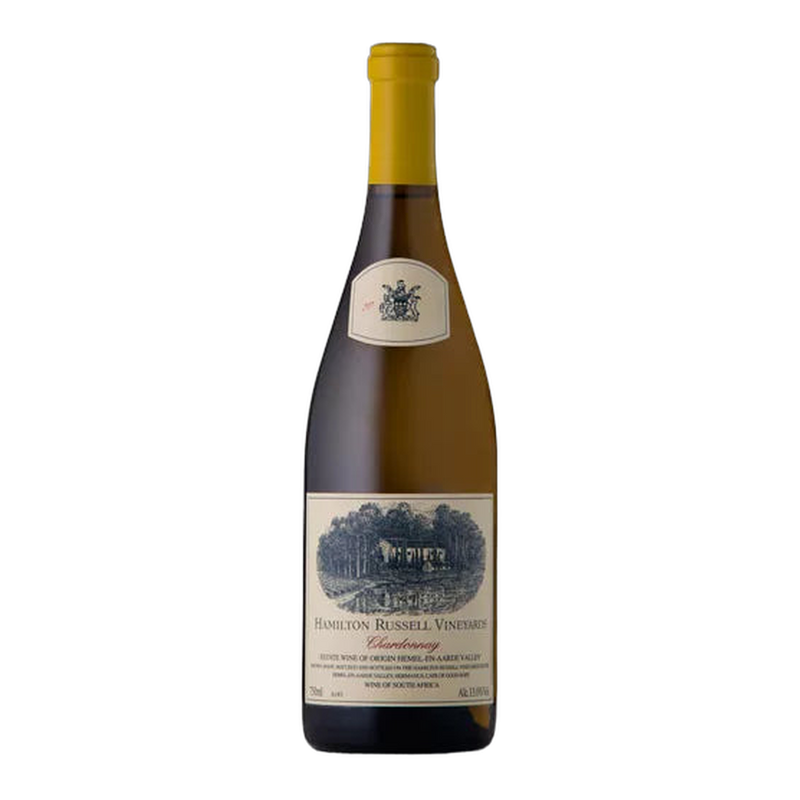


Tim Hamilton Russell, founder of Hamilton Russell Winery, unlike most New World wineries, chose terroir. In the relatively cool Walker Bay, three kilometers from the Atlantic Ocean, he wanted to cultivate varietals capable of producing excellent wines that also reflected their specific origins. He selected two grape varieties that he expected would yield top quality in the cool Walker Bay. This is a stark contrast to the choices of most other New World wineries. His Chardonnay and Pinot Noir are now world-renowned. This Chardonnay, too, consistently receives top marks in the international wine press.
His son, Anthony, took over the company in 1991 and devoted considerable attention to soil research. Ultimately, 52 hectares of clay-rich soil with schist, slate, limestone, and abundant stones were deemed the best. Plantings of Chardonnay and Pinot Noir were therefore limited to land with this soil type. Due to the low yields, high quality, and global demand, these wines are always in very limited supply.
Over ninety percent of the Chardonnay is fermented in a large selection of French oak barrels. Smaller portions are also fermented in stainless steel, and in recent years, even in earthenware amphorae. Pear and lime fruit are evident on the palate. The wine is natural and pure. A wine that ages well and, after a few years, develops a characteristic hazelnut complexity. In short, an elegant wine with a Burgundian personality.


