


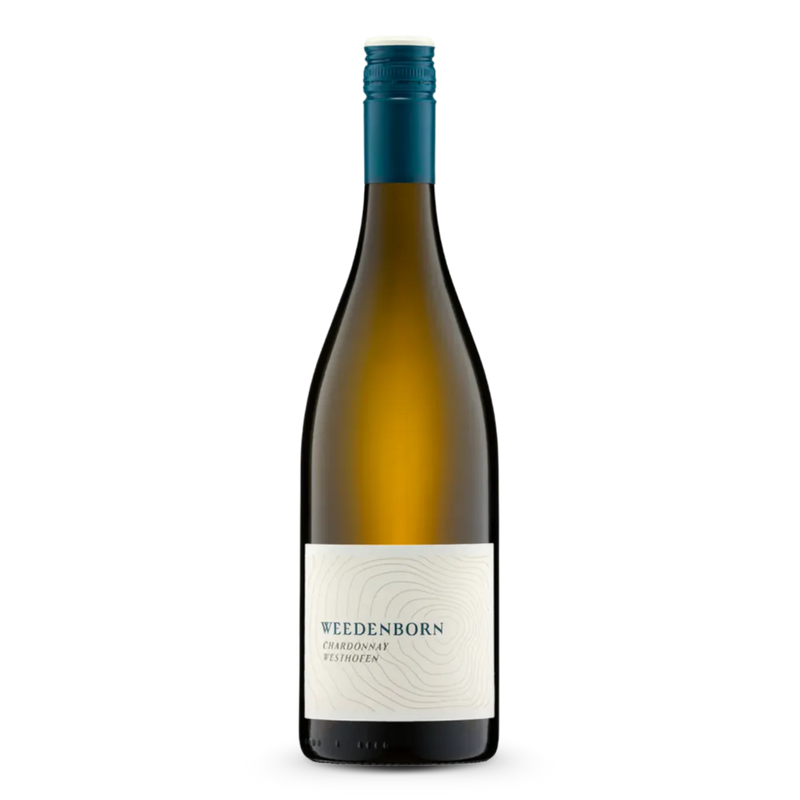


The limestone-rich soils of the Wonnegau form the basis for this distinctive village wine.
-
Location / origin: The grapes come from the heart of the Westhofener Steingrube, near Westhofen in the German wine region of Rheinhessen. Terra Rossa belongs to the "Ortsweine" (village wines) of Weedenborn: wines where the origin from a specific village is central.
-
Soil: The selected plots are situated on terra rossa, a red, calcareous clay loam. This soil was formed by the weathering of old limestone-rich marine deposits and has excellent water-retention properties. Within the Steingrube, limestone rocks with a thin layer of sandy loam are also found.
-
Vineyard history: Steingrube was already mentioned in 1295 as 'dicto stheingrube'. The name refers to a former stone quarry, thus connecting directly to the limestone-rich geology of this vineyard.
Protective handling of the grapes and long-term yeast contact combine aromatic freshness with extra texture.
-
Harvest & selection: The grapes are hand-picked and processed with dry ice. The resulting carbon dioxide helps protect the must from oxygen, ensuring that the fresh fruit and herbal aromas are preserved during processing.
-
Fermentation: The must ferments spontaneously into a distinctly dry wine. The taste is therefore primarily supported by fruit, texture, and fresh acidity.
-
Aging / wood maturation: Approximately 60–70% is aged in large Stockinger wooden barrels; the rest remains in stainless steel tanks. During 9 months of yeast contact, the wine develops extra cohesion and a smoother texture. The combination of wood and steel provides space for both structure and clear fruit expression.
A single grape variety provides the interplay of expressive aromas and a lively structure.
-
Sauvignon Blanc – Westhofen: Sauvignon Blanc brings citrus, gooseberry, and fresh herbs, with natural acidity that supports the concentrated flavor. In this version, riper fruit tones and a refined grip are also given a clear role.


