
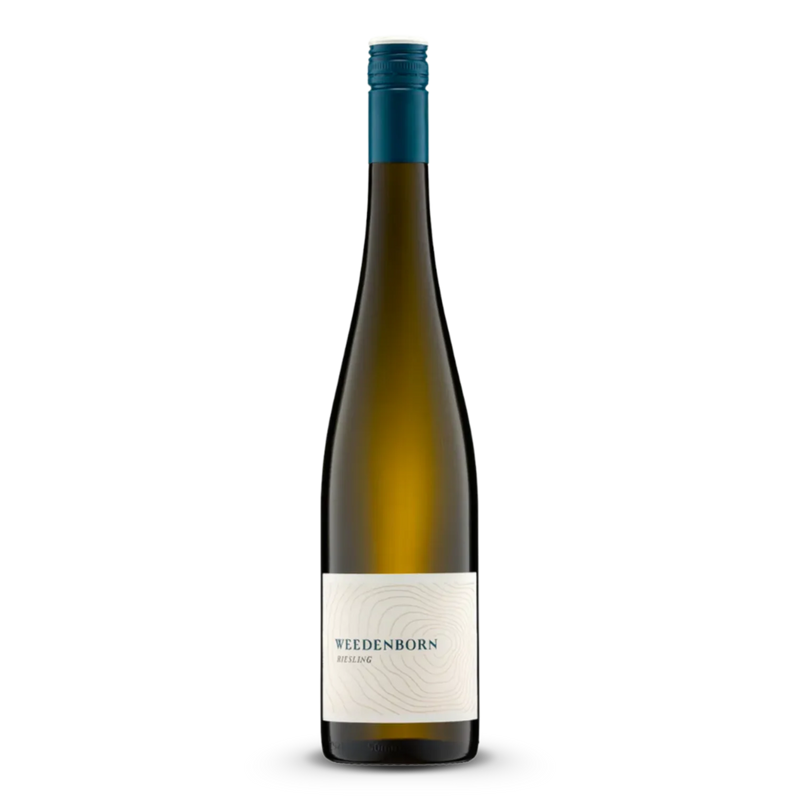


This wine is one of the Gutsweine, the estate wines with which Weedenborn makes its house style accessible.
-
Location / origin: The wine comes from Rheinhessen in Germany. Weedenborn is based in Monzernheim, in the southern Wonnegau sub-region, close to the vineyard slopes of Westhofen.
-
Soil: The grapes grow on calcareous marl and loess loam. This combination brings together lime-rich soil with fine loam and clay particles that can retain moisture, a useful buffer for the vines during drier periods.
-
Climate & influences: The higher-altitude vineyards around Monzernheim benefit from cooling winds. Ripening in this environment is more gradual than on the lower slopes near Westhofen, allowing for a harmonious blend of aromatic development and the preservation of natural freshness.
Processing prior to pressing provides extra aromatic depth; during fermentation, the focus remains on the fruit.
-
Harvest & processing: The grapes are hand-picked, destemmed, and lightly crushed. The juice and skins are then left in contact for about 18 hours before the must is pressed. This skin maceration helps to release aromatic compounds from the grape skins.
-
Fermentation: Alcoholic fermentation takes place primarily in stainless steel tanks. These neutral fermentation vessels do not add any wood aromas, allowing space for the fresh fruit expression and the inherent character of the grape.
The natural acidity forms an important part of the lively, dry style.
-
Riesling – Rheinhessen: Riesling is a slow-ripening grape capable of maintaining a distinct, crisp acidity. This directs the juicy peach and apple fruit and supports the refined structure of this wine.


