

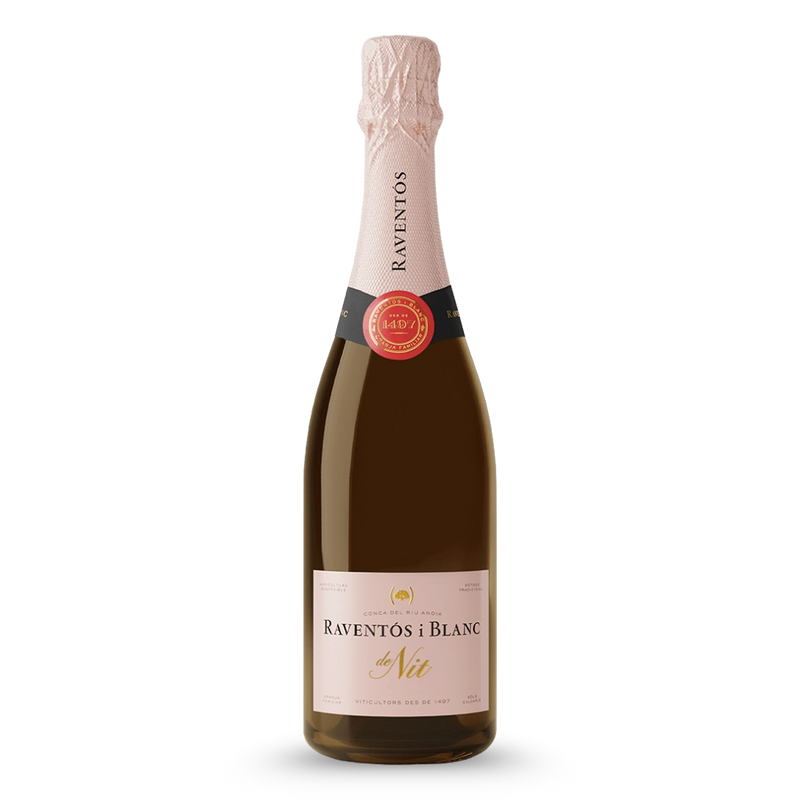


For his rosé cava, Manuel Raventos uses several different plots, primarily with clay and loam soils. The red grape that gives this rosé cava its color comes from the Serral hills. These high-altitude terraces provide the perfect climate for this red grape. It's especially important that the grapes retain their fresh acidity, resulting in a ripe and dry rosé cava. All grapes are harvested by hand and subject to rigorous selection. This means that only the finest bunches are pressed and used in this rosé cava. Once all the grapes are pressed, the winemaker creates the blend, a meticulous job that demands the utmost from a winemaker. But leave that to Raventos; thanks to their years of experience, you won't notice any difference between the vintages.
Once the blend is ready, the bottles are filled, not only with the still wine but also with sugar and yeast. The sealed bottle allows bubbles to develop on the surface. This method is also called the Méthode traditionnelle, as it's the same as for French Champagne. The total aging in the cellar lasts a full fifteen months, which is quite long for a Cava. It's a time-consuming process, but the final result is impressive! Not just any Cava, but a Grand Cru Cava—can we even call it that?
This is also a Vintage Cava, as the vintage is clearly visible on each bottle. On the nose, this Raventos i Blanc De Nit Rose Cava has aromas of Mediterranean herbs and a hint of strawberry, beautifully powerful. A truly full-bodied young Cava, and on the palate as well, we discovered hints of red fruit, lovely acidity, a very refined mousse, a touch of toast, and a hint of citrus peel. In short, a Rose Cava for true connoisseurs!


